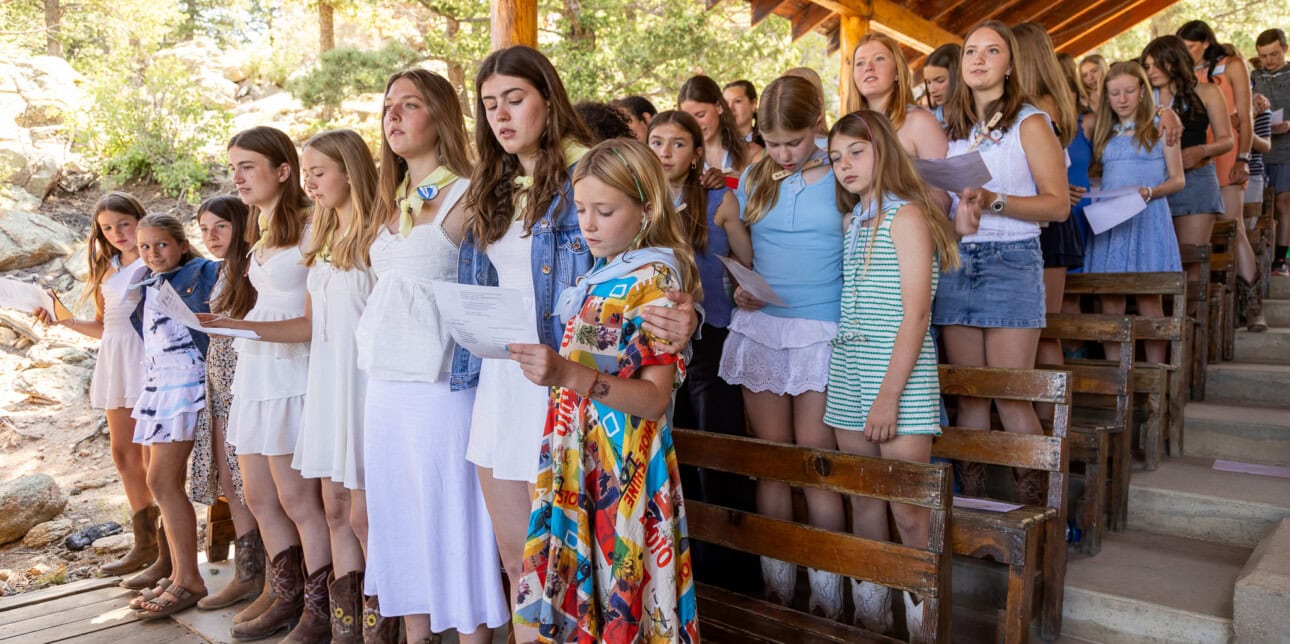
If you hear the word “Chapel,” you might picture something formal or religious. At Cheley, it’s something different. Chapel is a weekly gathering rooted in reflection, community, and character development. It’s led by campers and staff, shaped by tradition, and designed to give everyone a moment to pause in the middle of a full, active week at camp.
A Shared Moment in a Full Week
Chapel is intentionally non-religious. We welcome campers and staff of all faiths, and those who don’t identify with any faith tradition. What brings us together is not a specific belief, but a shared commitment to growth, respect, and the values we live by each day.
Each week, Chapel invites campers to slow down. Between hikes, rides, and other summer camp activities, this hour creates space to reflect. It’s a chance to think about friendships, challenges, and what it means to be part of a community. At the center of it all is the Code of Living, a set of values each unit creates together at the start of the term. Chapel gives those words a place to live and grow.
What Happens During Chapel
Chapel is created by the community, not performed for it. Each service includes:
- Camper readings, often short and meaningful reflections
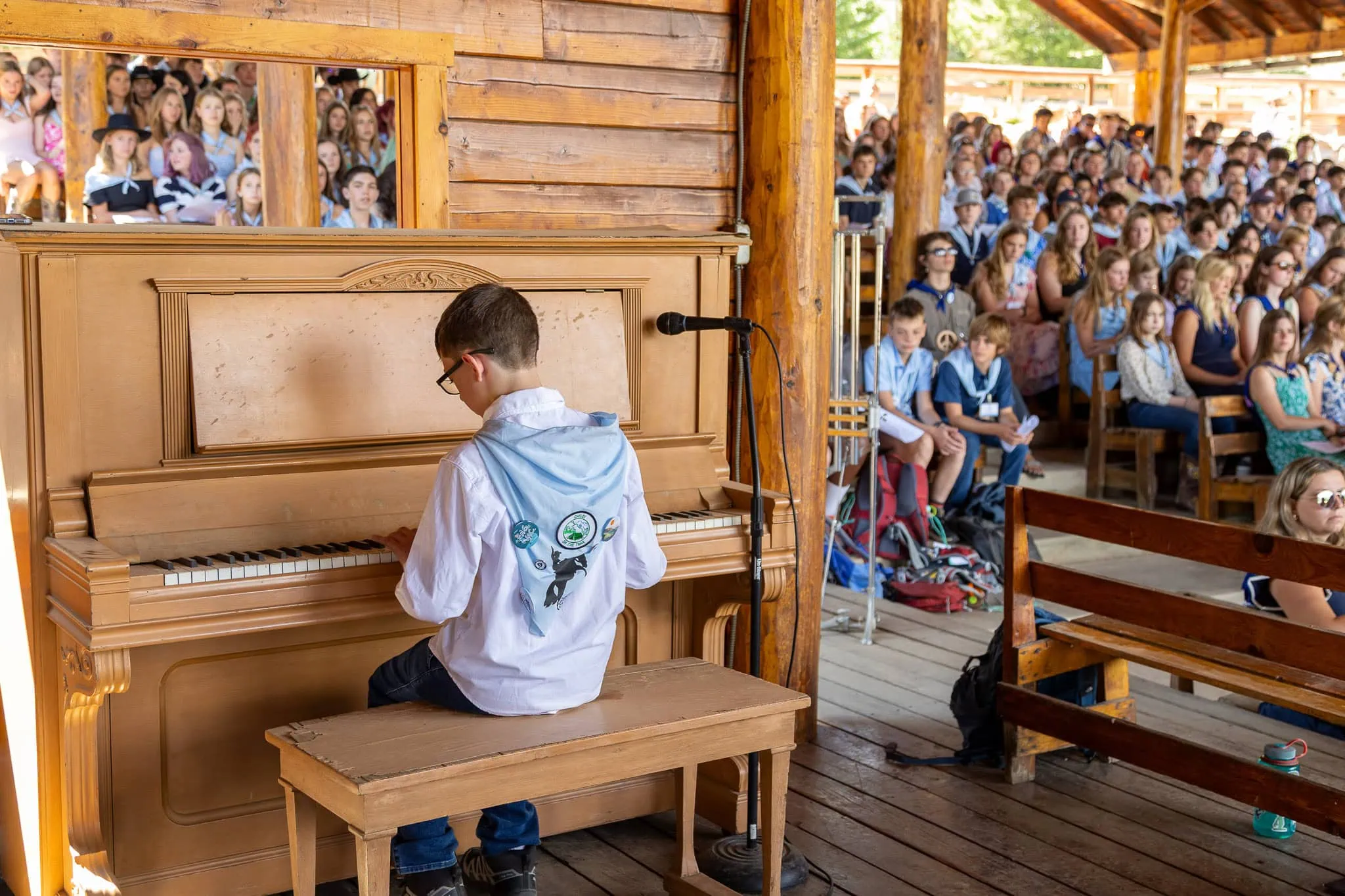
- Musical performances from campers and staff
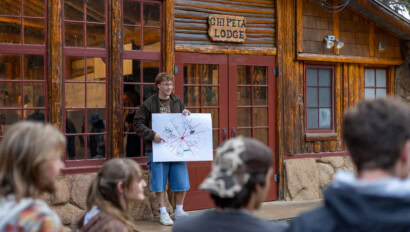
- A Chapel talk from a director, guest speaker, or community member
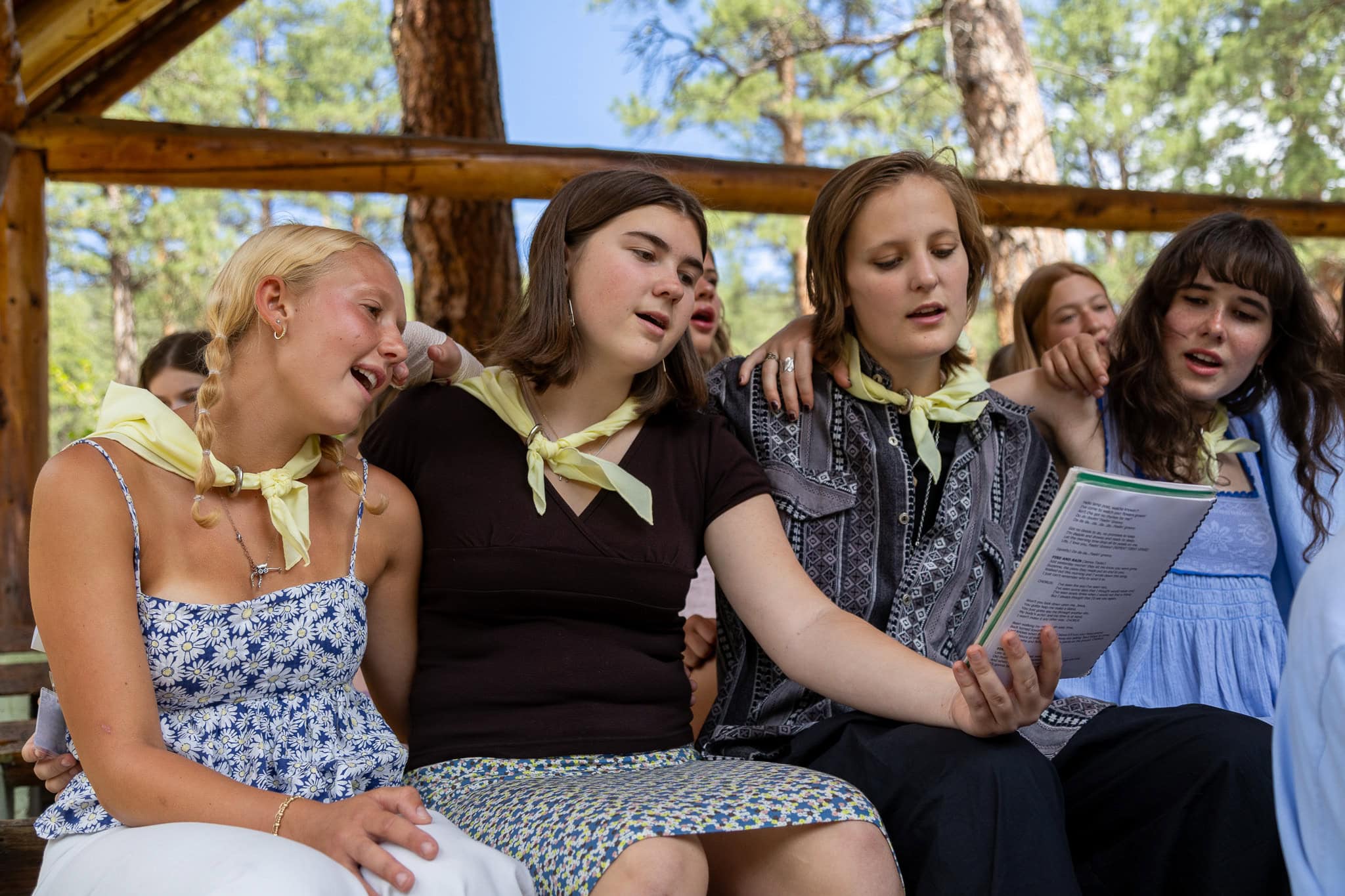
- Group singing that brings everyone together
Some parts of Chapel are shared across all of Cheley. We begin with “Edelweiss,” a quiet, familiar start that signals the shift into a more reflective space.
At Land O’Peaks, Chapel typically includes a talk from Jeff Cheley, Brooke Cheley-Klebe, or Shawn Ness, often centered on themes like growth, resilience, or what it means to be part of a community. At the Trails’ Ends, Chapel may include one longer talk from a guest or director, or sometimes multiple speakers sharing different perspectives.
Music carries throughout. Songs like “On the Loose” or “Circle Game” often invite everyone to stand and sing together, while Choir offers a chance for campers and staff to participate more fully. At LOP, Chapel closes with “Let There Be Love on Earth,” a tradition that brings the entire group together in a shared ending.
Different Places, Distinct Traditions
Chapel looks a little different depending on where you are, and those differences are part of what makes it meaningful.
At Land O’Peaks, Chapel is a time when main camp comes together in one place. Campers often arrive a little early or linger afterward, taking time to see friends from other units or connect with siblings and family members. Those small moments add to the sense of connection that carries throughout the week. Choir is also a central part of the experience, and the setting itself, surrounded by the mountains, creates a feeling of perspective and shared experience.
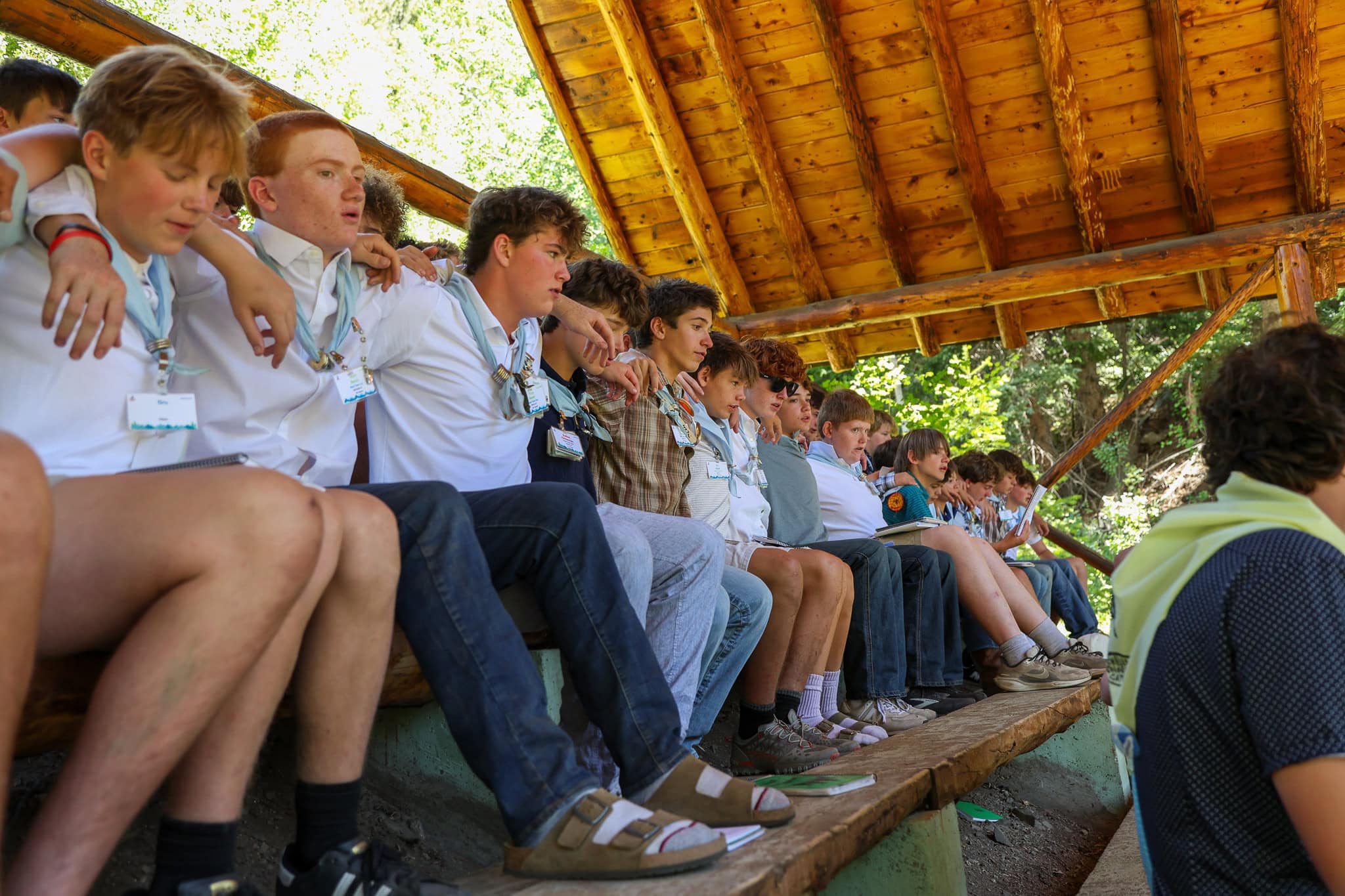
At the Trails’ Ends, Chapel happens within the Boys’ Trail’s End (BTE) and Girls’ Trail’s End (GTE) communities, each with their own traditions.
At GTE, Chapel often begins before it even starts. Campers sing together on the walk up, often “Edelweiss,” creating a shared rhythm as they arrive. GTE Chapel closes with “Walk, Shepherdess, Walk,” a tradition that carries a strong sense of continuity and connection across summers. At BTE, traditions like touching the rock offer a quiet, personal moment before stepping into the gathering.
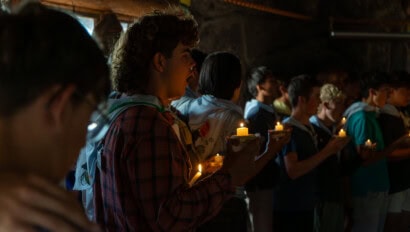
At both TEs, there is also space at the end that feels especially meaningful. After Chapel concludes, campers and staff are invited to remain quietly in the space if they choose. Some stay for a few moments, others a bit longer. It’s an unstructured time for reflection, allowing each person to leave Chapel at their own pace.
Each location also has its own way of showing appreciation. At BTE, campers nod in place of clapping, while at GTE and Land O’Peaks, applause or sign language clapping is used to recognize performances.
These rituals are simple, but they matter. They help campers feel part of something that lasts beyond a single week or even a single summer.
Final Chapel: A Meaningful Closing
As the term comes to a close, Chapel takes on a different tone. Final Chapel is one of the most meaningful traditions at Cheley, held on the last full day of camp and open to family and friends who are visiting for the end of the term.
- At Land O’Peaks, one camper from each of the six units shares a “What Camp Means to Me” reflection. These are personal, often heartfelt moments that capture the growth, friendships, and experiences of the summer.
- At Trails End, the format is a little different. Campers speak by year, with representatives from each level, first-year, second-year, third-year, and beyond, sharing their perspectives. It creates a broader picture of the camper journey over time.
In both places, Final Chapel brings the entire community together, campers, staff, and families, to reflect on what the summer has meant. It’s a chance to hear directly from campers in their own words, often marking how much they’ve grown in just a few short weeks. There’s a sense of closure, but also continuity. The values, friendships, and experiences shared throughout the summer don’t end here. Final Chapel helps carry them forward.
Why Chapel Matters
In the rhythm of an overnight Colorado summer camp, Chapel offers something steady. It’s a moment each week to step back, reflect, and reconnect with what matters. For some campers, it’s where they begin to understand the Code of Living more deeply. For others, it’s where they find the courage to speak in front of their peers. For many, it’s simply a quiet hour that stays with them long after the summer ends.
Chapel doesn’t ask campers to believe anything specific. It invites them to think, to listen, and to grow.
Frequently Asked Questions
Is Chapel religious?
No. Chapel at Cheley is intentionally non-religious.
At Cheley, we warmly welcome campers, staff, and families of all faiths, as well as those without religious affiliations. While Cheley was founded in 1921 with Christian roots, today we do not have a formal religious affiliation. Our focus is on creating an environment where everyone feels comfortable, respected, and included.
This commitment means that religious teachings, ceremonies, and traditions are not part of the Cheley Experience. Chapel is centered on reflection, character development, and the Code of Living rather than any specific belief system.
You may notice that some traditional songs or moments around camp include historical or cultural references, including words like “God.” Participation in those is always optional, and campers are encouraged to engage in ways that feel right for them.
Despite the name, Chapel is simply a time to pause, reflect, and connect with the community.
Do campers have to attend Chapel?
Yes, all campers and staff attend Chapel each week.
Being there is part of the shared community experience at Cheley. It’s a time to slow down, reflect, and come together in the middle of a full week of summer camp activities.
Active participation, like reading, singing, or speaking, is always optional. Campers are simply asked to be present and respectful of the space. Some choose to listen quietly, others engage more actively, and both are part of the experience.
What is the difference between Chapel and Vespers?
While both are reflective experiences, they feel very different.
Chapel is a larger gathering that brings together all of LOP or the Trails’ Ends. It includes readings, music, and a Chapel talk, all within a shared space.
Vespers is smaller and quieter. It takes place within individual units, often outdoors, and is designed to create a more personal, unstructured time for reflection. There are usually pauses between limited readings, and silence is an important part of the experience.
Can campers participate in Chapel?
Yes, and many do.
Chapel is led by the community, and campers are an important part of that. Those who are interested can sign up to read, speak, play an instrument, sing, or perform as part of the service.
Campers work with their campfire counselor ahead of time to choose their piece and practice. This helps them feel prepared and supported, whether it’s their first time speaking in front of a group or something they’ve done before.
Participation can look different for everyone. Some campers volunteer right away, while others build the confidence to take part later in the term. Whether they’re standing up in front of the group or joining Choir alongside their friends, each role is a meaningful way to contribute to the Chapel experience.
What do campers wear to Chapel?
Chapel attire is one of the most common questions we hear from families. The short answer is “nicer,” but still comfortable and practical. Campers don’t need anything formal or dressy. The goal is to look put-together and thoughtful, without feeling overdressed. Think school picture day or a casual brunch. Campers wear their Blue Kerchief, along with clothing that feels respectful of the setting and easy to move in. That might include:
- A dress, skirt, or nice shorts with a top
- A collared shirt or clean t-shirt with shorts or pants
- Shoes appropriate for walking to and from Chapel
There’s no expectation of formal wear. Chapel is about showing care for the space and the community, not dressing up in a specific way.
Our dress code is grounded in inclusion and respect. Campers should feel comfortable, confident, and able to express themselves. At the same time, we ask that clothing supports a positive environment and does not distract from the shared experience. We also emphasize that each person is responsible for their own choices, not for judging someone else’s.