

If you’ve spent time researching summer camps, you’ve likely seen staff-to-camper ratios prominently featured: 1:3. 1:4. “Low ratios!” It’s an understandable place to focus. Ratios do matter. But the truth is, a single number rarely tells the full story and, in some cases, it can actually be misleading. So let’s talk honestly about what camp ratios really mean, what they don’t mean, and how we think about supervision at Cheley.
The Common Misconception About Ratios
When families see a ratio like 1:4, it’s easy to picture one counselor supervising the same four campers all day long. That’s simply not how camp works. Camp is dynamic. Campers move throughout the day from activities, to meals, to free time, to cabins, to showers, to evening programs, and sometimes off property. The appropriate level of supervision changes constantly depending on what campers are doing, where they are, and how old they are. A single ratio is often an average, not a moment-by-moment reality.
What Ratios Look Like at Cheley
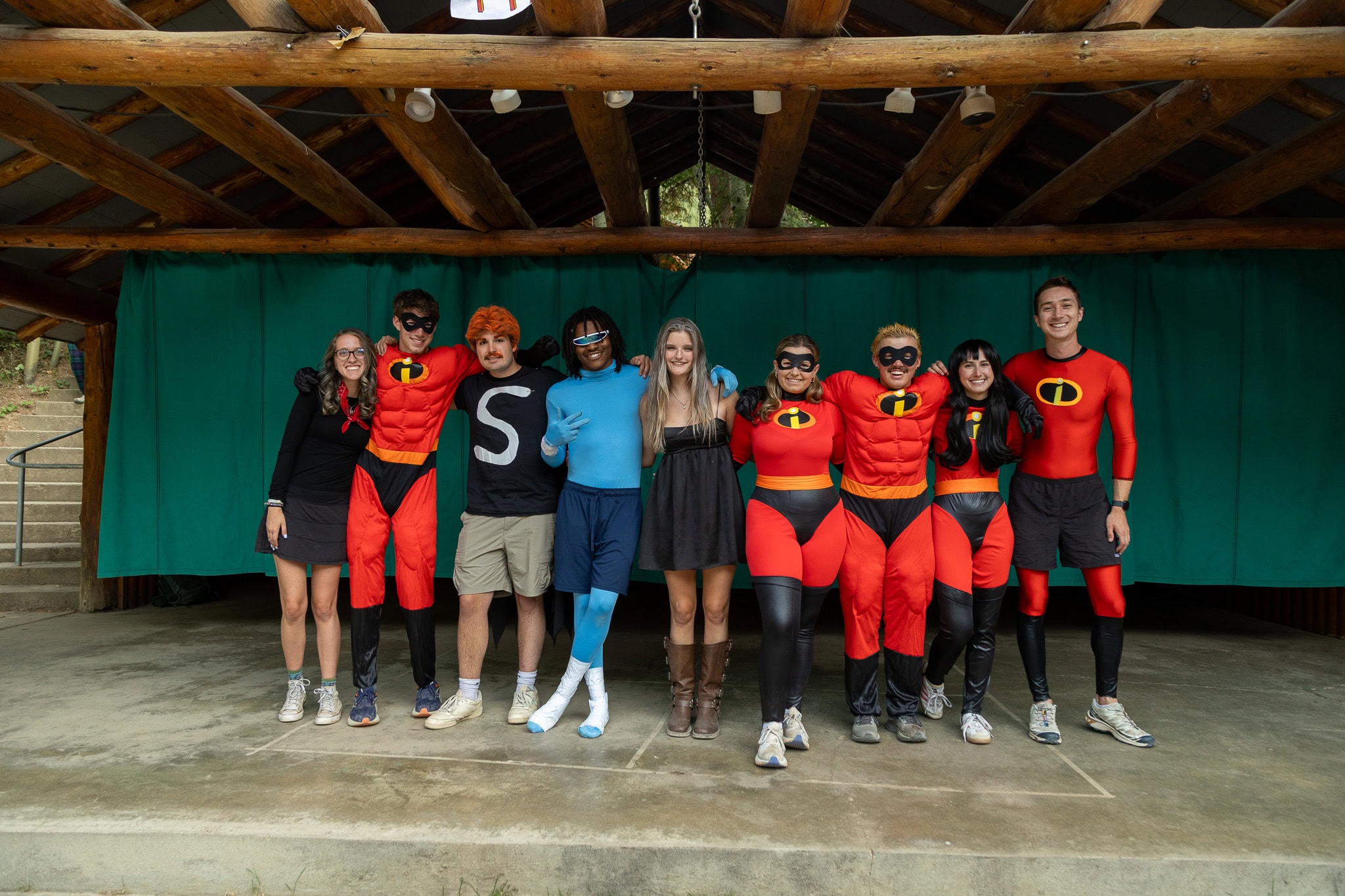
During a typical session at Cheley, we have nearly 500 campers and about 250 staff, which works out to roughly a 1:2 overall ratio. Within units, the numbers often look closer to one counselor for every four campers. Each camper also has a Go-To Counselor — the adult who knows them best during their time at Cheley. Go-To Counselors check in often, get to know what excites or challenges their campers, and serve as their primary advocate throughout the term. Because of this relationship, counselors are often the first to recognize when a camper is thriving or when they may need a little extra support.

Ratios Change Based on What Campers Are Doing
At Cheley, supervision is planned at the activity level, not just at the unit or camp-wide level. Campers break into small program groups, and those groups are sized based on camper age, activity type and environment, location (in camp vs. out of camp), skill level and progression, and transportation and logistical needs. For example:
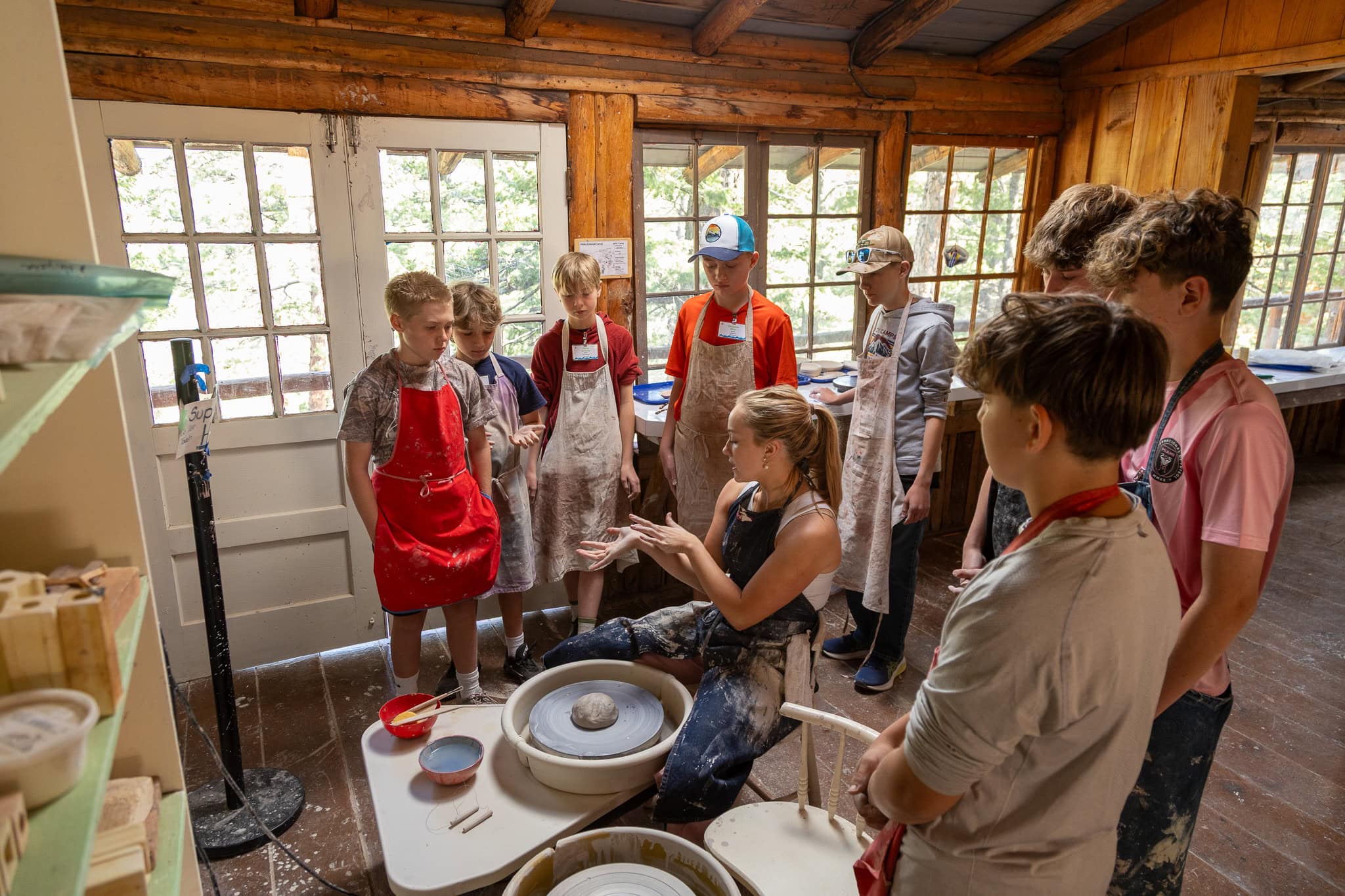
- Many in-camp activities operate in small groups, often around 6–8 campers per counselor, sometimes with additional staff support.
- Younger campers are consistently placed in smaller groups with more staff supervision.
- Older campers may participate in slightly larger groups with appropriate oversight.
- Out-of-camp activities (such as hiking, backpacking, horseback riding, mountain biking) are staffed with at least two people and never rely on a single counselor alone.
For certain activities (such as rafting, technical climbing, fly fishing, SUP, or via ferrata), we staff groups with Cheley counselors and professional guide services, meaning campers are supported by both our trained staff and experienced external guides. In addition, several specialty programs, such as ceramics, woodworking, sewing, the climbing wall, high ropes, and the challenge course, are supported by specialists who work alongside counselors, adding another layer of experience and oversight. These staffing plans aren’t casual or improvised. Group sizes, staffing levels, and supervision requirements are all intentionally designed and adjusted as needed.
We also intentionally limit the number of campers in each unit and the number of campers who can sign up for a given activity. Smaller, more intimate groups allow campers to form stronger connections with one another and give counselors the space to thoughtfully support each camper’s experience.
Supervision Beyond Activities
One of the most overlooked parts of ratios is everything that happens outside of scheduled programs. At Cheley, supervision continues throughout the entire day in ways that don’t show up in a single ratio:
- At meals, we typically have a counselor at every table, which means at least one counselor for every seven campers.
- During free time, counselors are intentionally scheduled for additional coverage throughout the unit, including in cabins and the wagon yard, unit areas (such as the lodge), near the camp store, and boathouses (our shower areas).
These roles are planned in advance so campers are in supervised, supported spaces, even when they’re choosing how to spend their time. At night, supervision continues:
- Counselors are scheduled to monitor cabins
- Staff are nearby and on duty
- Coverage is clearly defined, so campers are supported during nighttime routines and rest
At Land O’Peaks, there are at least two counselors in every cabin, while at the Trail’s End units, counselors sleep in cabins directly adjacent to the wagon yard, meaning close overnight supervision.

Why You Won’t See One “Exact” Ratio
Because camp supervision depends so heavily on context, there isn’t one number that accurately describes every moment of the day. Ratios change based on camper age, activity choice, time of day, whether campers are on or off property, group size, and proximity to other activities.
Many of our in-camp activities are intentionally close to one another, which means counselors, specialists, and leadership staff are nearby and visible, an additional layer of support that a single ratio can’t capture. There is also a unit director on property, whose role is to support staff, step in when needed, and help everything run smoothly. Counselors are never operating in isolation.
What Really Matters
Ratios matter, but how a camp thinks about supervision matters more. While there isn’t a single number that captures every moment of the day, there is a clear supervision plan in place, coverage, and support designed to meet campers where they are and foster a thoughtful, well-supported experience. At Cheley, we don’t rely on a single number to help keep campers safe and supported. We rely on:
- Thoughtful planning
- Layered supervision
- Trained counselors
- Specialists and professional guides
- Proximity and visibility
- Clear coverage throughout the day
- Leadership presence and support
Camp is dynamic, and our approach to supervision is designed to match that reality. If you’re evaluating camps, we encourage you to look beyond the headline number and ask deeper questions about how supervision actually works. Those answers will tell you far more than any single ratio ever could.