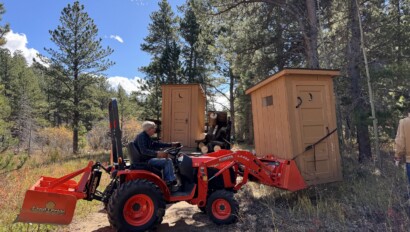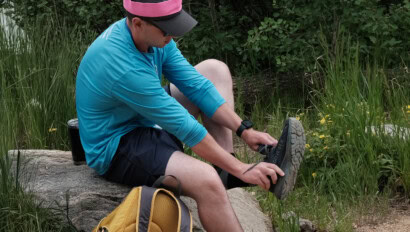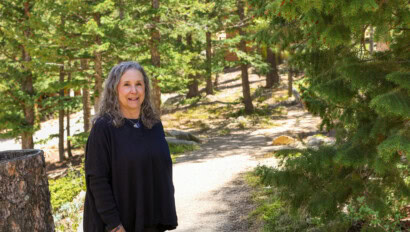
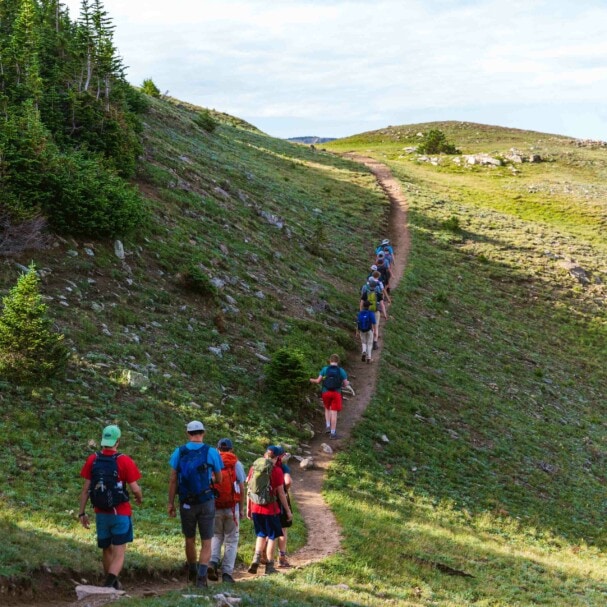
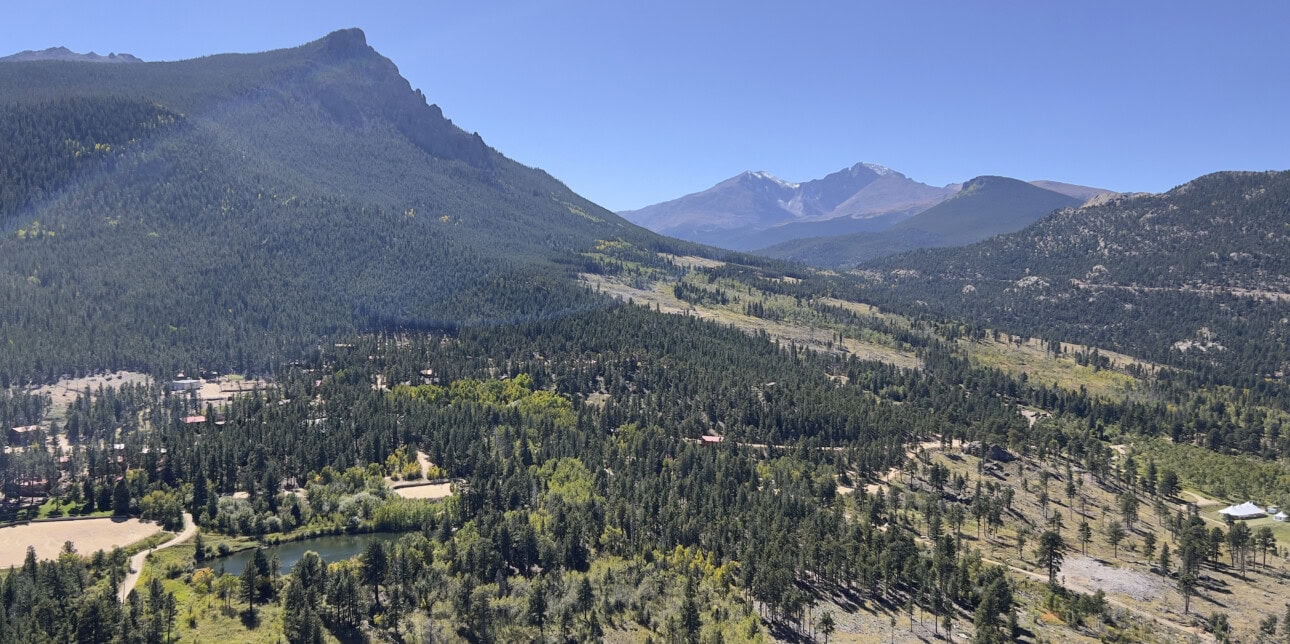
One of the most iconic views at Cheley is from Christmas Tree Rock, looking out over Land O’Peaks with forests stretching across the valley. Right now, that view looks a little different than the postcard image many remember. But if you’ve spent time at Cheley, you know the forest has never just been scenery.
It’s where campers hike, reflect, and build confidence, and it shapes the rhythm of daily life at camp. It’s even woven into our unit songs, words we’ve sung for generations: “Hidden by bush and tree, bounded by rushing stream…”; “High on the hill you stand, sheltered by pine trees tall…”; “Green trees around us, blue skies above…” So much of what we do happens within these forests, which is exactly why caring for them matters so deeply.
Where This Work Began
In September 2013, heavy rains brought historic flooding to the Estes Valley, impacting parts of our property and access roads. As we began the process of recovery, we also saw an opportunity, not just to rebuild, but to improve how the land functions.
A grant helped us restore the stream running through the ranch, reshaping it with natural curves so it could better handle high water flows. That project introduced us to partners at the Natural Resources Conservation Service (NRCS), and it opened the door to something bigger. Soon after, we began a long-term forest restoration effort, one that now spans more than a decade.
Why Forest Restoration Matters
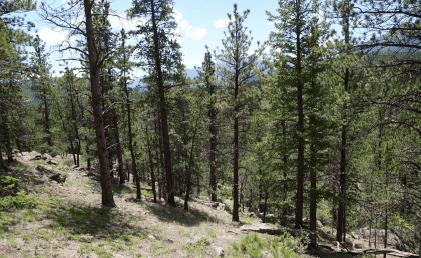
Many forests across Colorado, including ours, are not as healthy as they appear. Over the past 100–200 years, natural processes like wildfire have been suppressed. Without those natural disturbances, forests have grown too dense. Trees compete for limited water and nutrients, making them more vulnerable to disease, insect outbreaks, and severe wildfire.
Historically, this landscape was dominated by open stands of ponderosa pine that were spaced out, resilient, and adapted to periodic fire. Today, many areas are overcrowded with younger trees and less fire-adapted species. Our goal is simple: help the forest return to its historic density and a more resilient state.
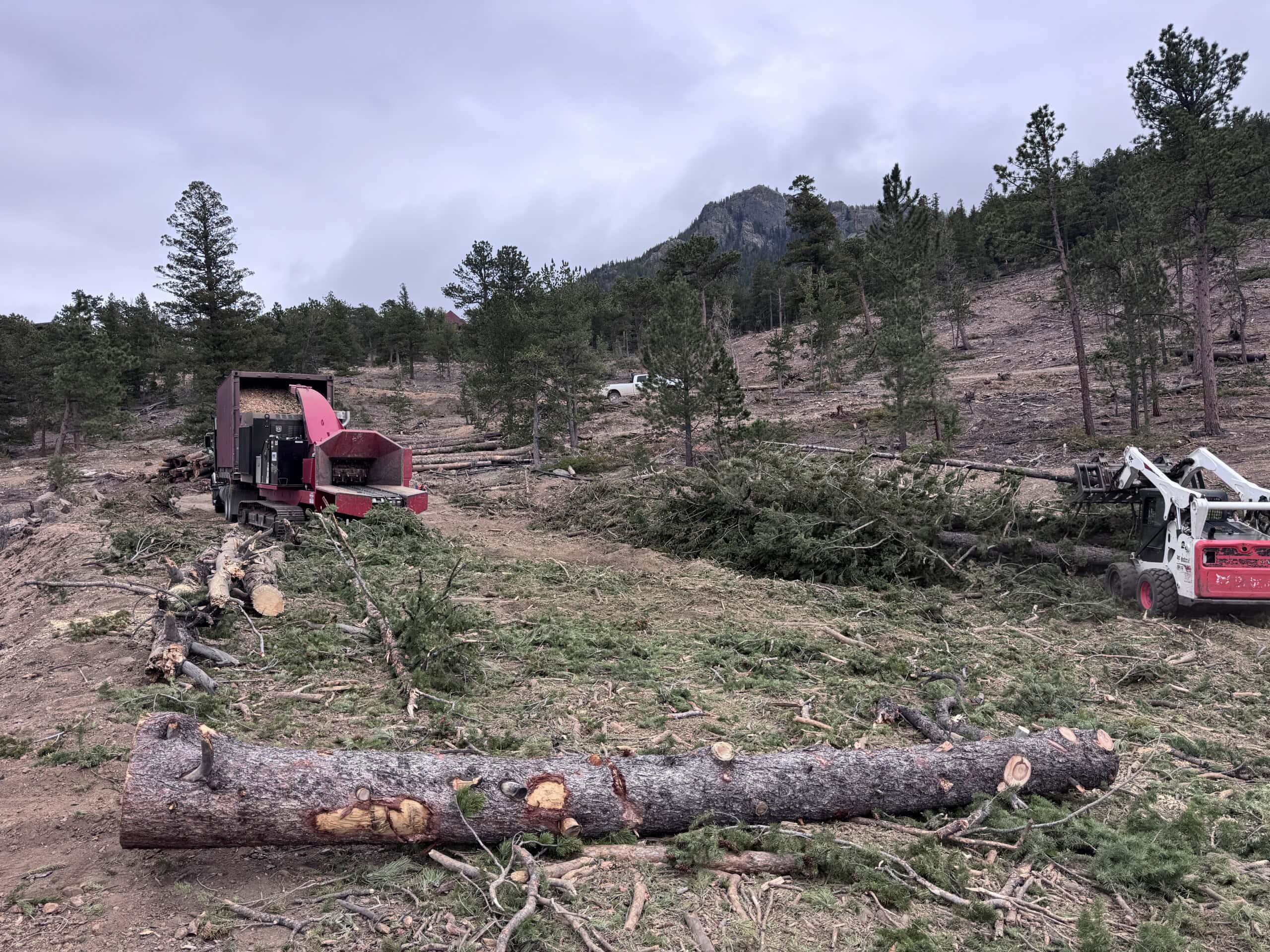
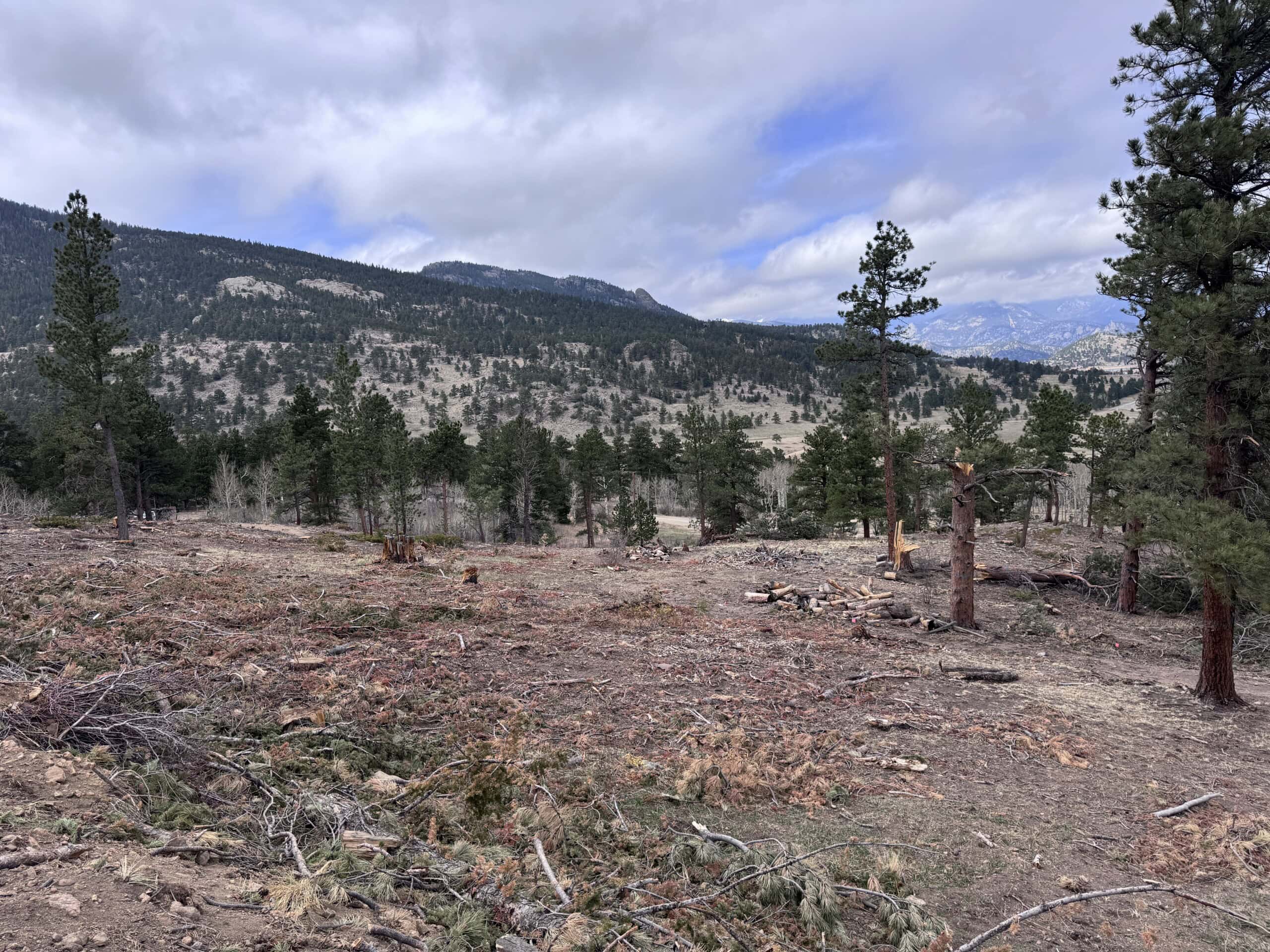
What Restoration Looks Like (At First)
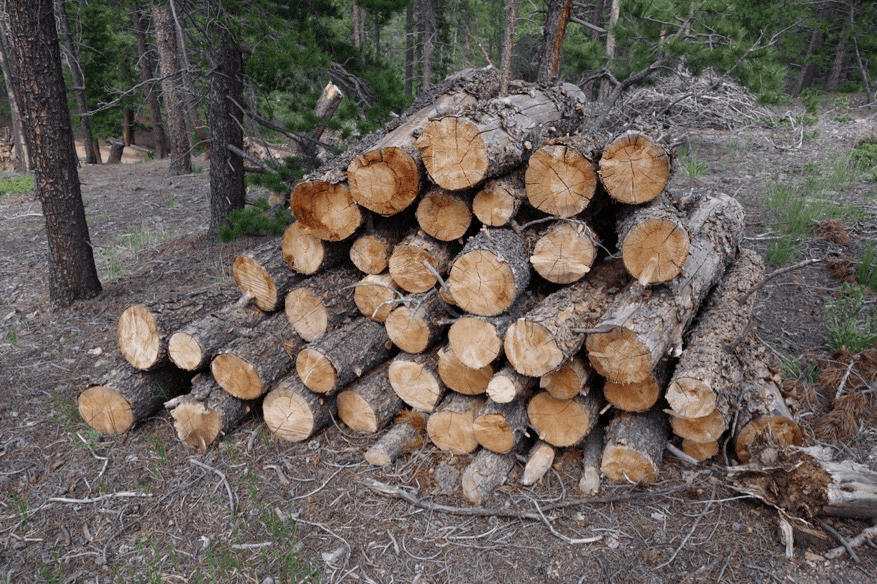
If you’ve walked near a recently treated area, you may have had the same first reaction many of us did: It can look… a little stark. One of our longtime team members once described it as “a bad haircut.” And that’s not far off. Selective thinning removes many trees (especially smaller, crowded, or unhealthy ones) to create space. In some areas, you’ll see larger openings. In others, you’ll notice more traditional thinning, but this is where patience comes in.
Within a few seasons, grasses, wildflowers, shrubs, and aspen begin to return. Sunlight reaches the forest floor again, water is used more efficiently, and wildlife habitat improves. We’ve seen it firsthand! Our earliest project areas now look vibrant, diverse, and alive in ways they hadn’t been before.
A Long-Term Commitment to Stewardship
Over the past 10+ years, we’ve completed multiple phases of forest restoration across our properties, including at Land O’Peaks Ranch and areas near Girls’ Trail’s End and the Outpost. This work is guided by science-based forestry practices and long-term planning. According to our forest management approach, key goals include:
- Reducing wildfire risk and creating defensible space
- Improving forest health and resilience to insects and disease
- Restoring natural tree densities and species balance
- Enhancing wildlife habitat and biodiversity
- Supporting soil health and water quality
This isn’t a one-time project, but rather an ongoing commitment. Forests are dynamic systems, and caring for them requires attention, adaptation, and time.
What This Means for Campers
For campers at our Colorado summer camp, this work may not always be obvious, but its impact is everywhere. It means:
- Safer forests with reduced wildfire risk
- Healthier ecosystems to explore and learn from
- More open spaces for activities like hiking, horseback riding, and overnight trips
- A living example of environmental stewardship in action
It also creates opportunities for conversation about how we care for the land, why change can feel uncomfortable at first, and what it means to take a long-term view.
Looking Ahead
This past winter, work continued near the high ropes course and the western side of Haiyaha. Like before, the initial changes may feel surprising, but we’ve learned to trust the process because we’ve seen what happens next. The forest fills back in. Not the same as before, but stronger, more balanced, and better prepared for the future.
At Cheley, we believe that growth, whether in young people or in forests, takes time, intention, and care. This work is one way we live that belief every day.
A Closer Look at the Work
For those who are interested in a deeper look, we’ve shared a snapshot of two recent projects. These outlines show the science, partnerships, and measurable impact behind the work, from reducing wildfire risk to improving water quality and forest health.
If you’re curious to learn more about our forest restoration efforts or how stewardship is part of the Cheley Experience, we’re always happy to share more.